Case studies/MetaPro
European Social Fund+ · Education and Employment Programme · SMIS code 317673
MetaPro
Innovation in technology for tomorrow’s professionals
Metaminds prepares 252 students from Romania’s less-developed regions for the move from university to the labour market — through real practice placements, entrepreneurial training and a direct partnership between academia and the private sector.
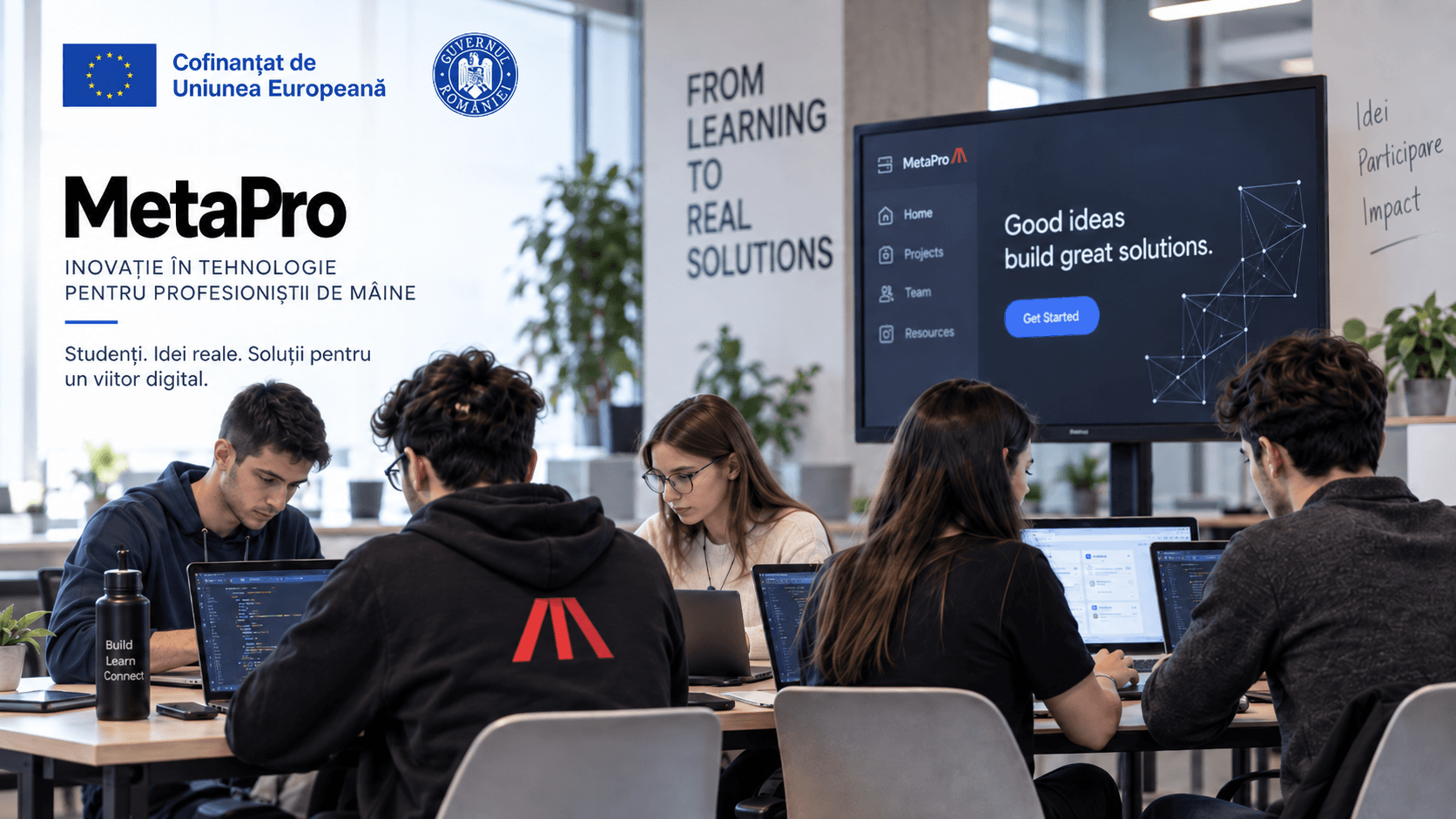
01Project identity
A project funded under Priority 7 of the Education and Employment Programme
The call — Promoting the development of high-quality, flexible tertiary study programmes aligned with labour-market needs — STUDENT PLACEMENTS — is aimed at students from less-developed regions.
The project answers specific objective ESO4.5: improving the quality, inclusiveness, effectiveness and labour-market relevance of education and training systems, including through key, entrepreneurial and digital competencies.
Raising the quality of the education and vocational-training offer to ensure the system’s equity and a better fit to labour-market dynamics and to the challenges of innovation and technological progress.
| Beneficiary | METAMINDS S.A. |
| Project title | META-PRO — Innovation in technology for tomorrow’s professionals |
| Project code (SMIS) | 317673 |
| Financing contract | no. G2024-66362 / 22.10.2024 |
| Call code | PEO/71/PEO_P7/OP4/ESO4.5/PEO_A49 |
| Fund | European Social Fund+ (ESF+) |
| Programme | Education and Employment Programme 2021–2027 |
| Institution | Ministry of Investments and European Projects |
| Total value | 4,925,955.75 lei |
| EU co-financing | 4,679,608.61 lei |
| Duration | 24 months · 01.11.2024 – 31.10.2026 |
| Policy objective | A more social Europe |
02General objective
Education relevant to the labour market, for 252 students
The project aims to improve the relevance of the education and vocational-training system for 252 students resident in Romania’s less-developed regions, easing their entry into the labour market and their adaptation to its dynamics and to the rapid evolution of technologies and work processes.
It strengthens partnerships and close collaboration between academia and the private sector, ensuring through every planned action that study programmes are relevant and effective for the current needs of society and the economy.
Students can enrol at universities in Bucharest or any other university centre in the country — including through the collaboration agreement signed with Politehnica University of Timișoara. Recruitment is transparent, fair and open to any eligible student: bachelor’s, master’s or doctoral students (ISCED 6–8) aged 18 to 35.
Eligible regions: North-East, South-East, South-Muntenia, South-West Oltenia, West, North-West and Centre, rural or urban.
Key competencies for 252 students
Entrepreneurial competencies, climate transition, green jobs and the circular economy, developed within at most 24 months to ease labour-market access.
Activity A.1 · Result R1Socio-professional inclusion through real placements
Organising practical placements and building a sustainable partnership between the economic and academic environments, for 252 students from less-developed regions.
Activity A.2 · Results R2, R3 · Indicator EECO06+07Improved education level for 154 participants
Following completion of the placement and the training programme, participants remain in education or improve their education level.
Activities A.1 and A.2 · Indicator 5SR0903The project in numbers
Committed targets and achieved indicators
The committed value for output indicator EECO06+07 “Children and young people” is 252 people, above the 250 threshold set in the evaluation criteria. Result indicator 5SR09 is 154 participants — 61% of the output indicator.
04The practice series
Seven series, four universities, 252 students
The target group was organised into series aligned with the academic calendar and each specialisation’s curriculum. Each student completes the placement once over the two years of implementation.
Students per series
Series 6 was not formed; the numbering follows the project’s internal records.
Students per university
Percentages are the share of the 252-student target group.
Placement calendar
Placement periods per the curricula. The 24-hour entrepreneurship course runs separately, by group.
| Series | University | Students | Placement period | Placement hours | Entrepreneurship course |
|---|---|---|---|---|---|
| Series 1 | UTBV Brașov | 63 | 8 Apr 2025 – 9 May 2025 | 90 h | 24 h |
| Series 2 | ASE Bucharest | 61 | 9 May 2025 – 30 May 2025 | 112 h | 24 h |
| Series 3 | UPB Bucharest | 64 | 23 Jun 2025 – 5 Sep 2025 | 360 h | 24 h |
| Series 4 | ULBS Sibiu | 6 | 30 Jun 2025 – 20 Jul 2025 | 120 h | 24 h |
| Series 5 | ASE Bucharest | 22 | 16 Feb 2026 – 19 Mar 2026 | 112 h | 24 h |
| Series 7 | ASE Bucharest | 22 | 15 Apr 2026 – 15 May 2026 | 112 h | 24 h |
| Series 8 | UPB Bucharest | 14 | 22 Jun 2026 – 5 Sep 2026 | 360 h | 24 h |
| Total | 252 |
05Universities and faculties
Where the target-group students come from
Four universities supplied the project’s target group, across three university centres. The specialisations align both with Metaminds’ field of activity and with the internal departments hosting the interns.
Bucharest University of Economic Studies
Cybernetics, statistics and economic informatics, management, marketing, general economics, business administration.
112 placement hoursNational University of Science and Technology POLITEHNICA Bucharest
Electronics, telecommunications and information technology, software engineering, artificial intelligence, web technologies.
360 placement hoursTransilvania University of Brașov
Computer science, information security, software engineering, project management.
90 placement hoursLucian Blaga University of Sibiu
Placement run at the external practice partner ScandiaFood SRL, with entrepreneurship training at Metaminds.
120 placement hoursThe Series 8 kickoff took place at UPB — Faculty of Electronics, Telecommunications and Information Technology, 1–3 Iuliu Maniu Blvd, Room A02. Series 7 was hosted at Hotel Marshal Garden and Series 5 at the Metaminds office. For Series 4, the placement ran at the external practice partner ScandiaFood SRL.
06A student’s journey
From enrolment to the practice certificate
 Enrolment via an online form or by scanning the QR code
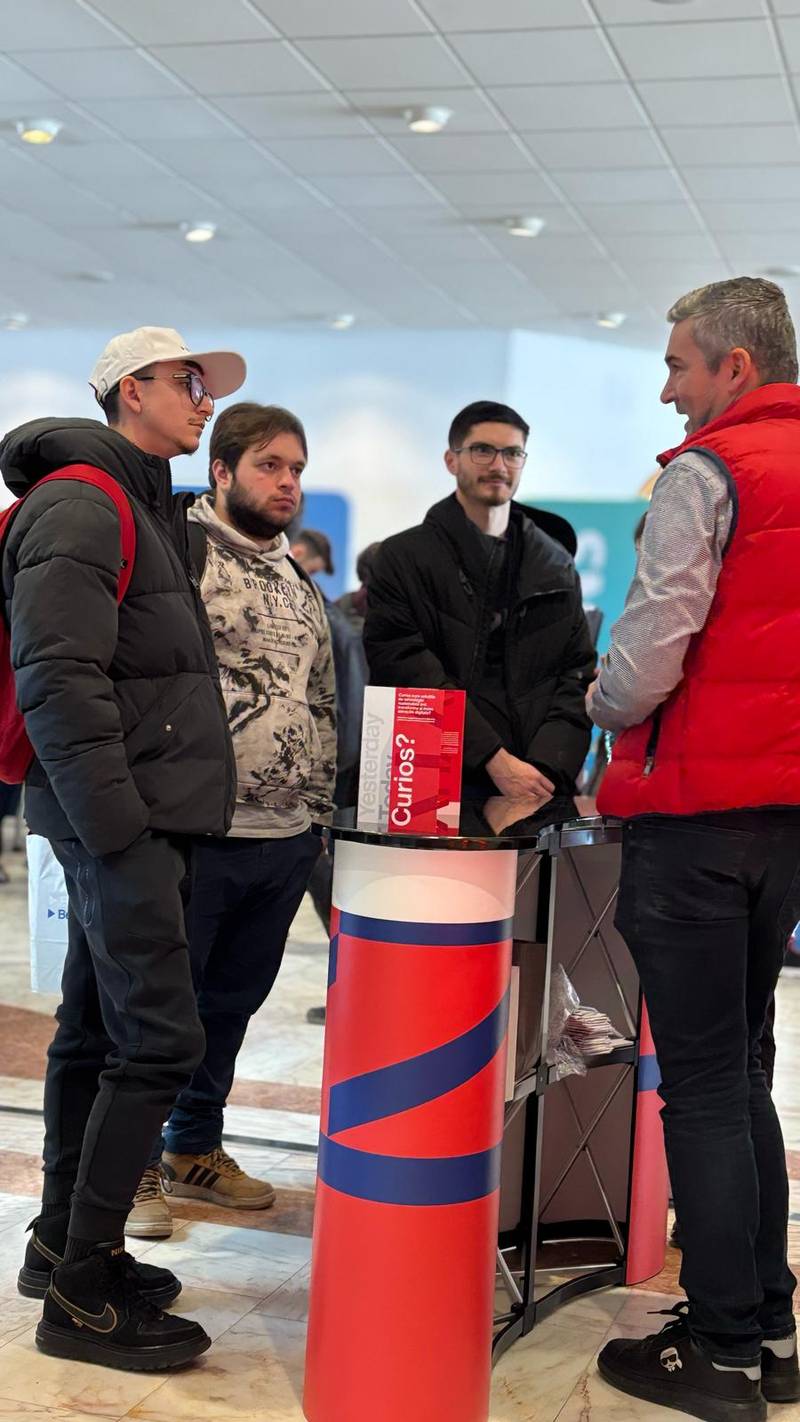 Information and recruitment sessions on campus
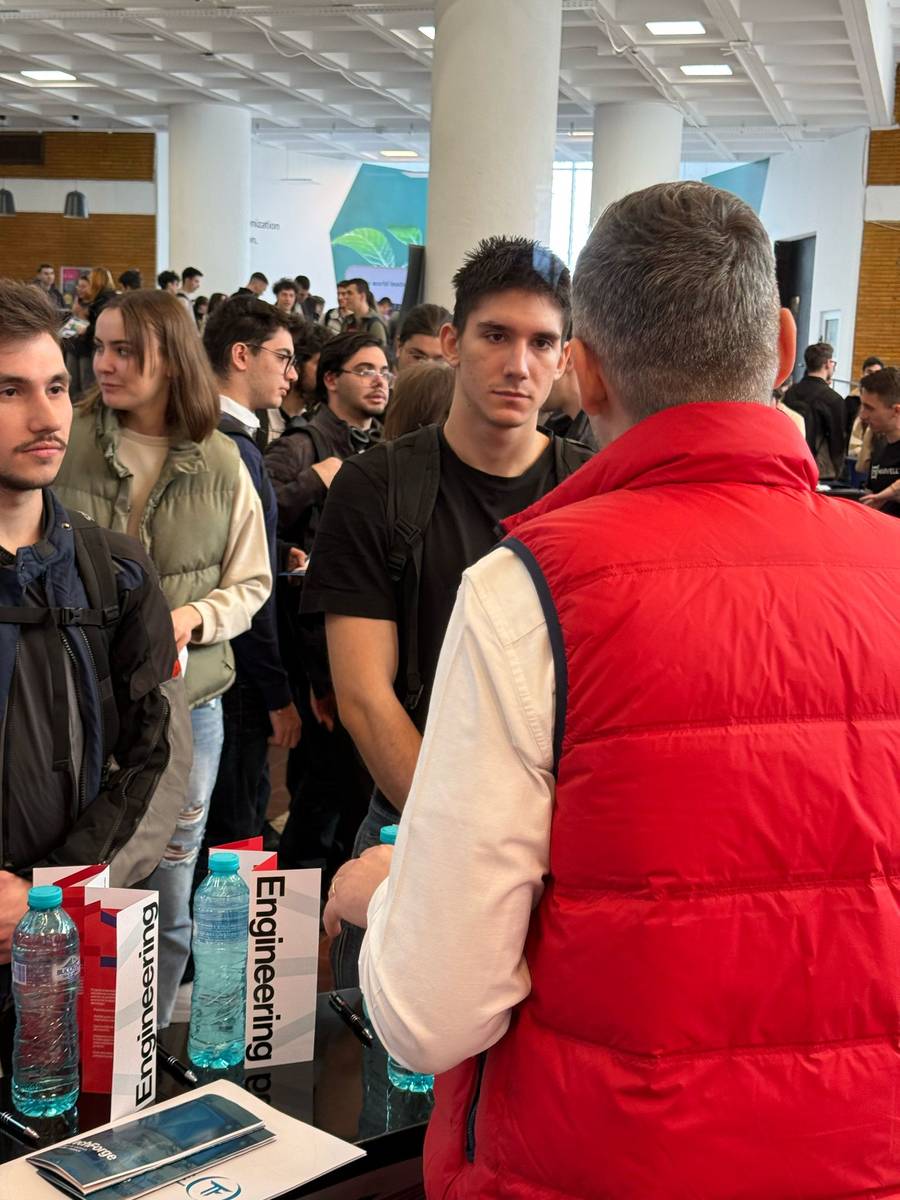 Direct conversations with eligible students
07Competencies gained
What students take with them at the end of the placement
The training programme addresses themes with major environmental and economic impact: the transition to a circular economy, sustainable energy management, ethics and social responsibility, pollution prevention, biodiversity protection, and innovation and entrepreneurship in the context of climate change.
Technical & professional skills
Applying theoretical knowledge in a real context, using field-specific tools and technologies, solving practical problems.
Digital skills
Working with the platforms, software and state-of-the-art technologies used at the employer, in smart-specialisation sectors.
Entrepreneurial skills
Defining an MVP, agile planning, product-team roles, validating the idea and building a business model.
Green skills
Transition to a circular economy, sustainable resource management, pollution prevention, biodiversity and ecosystems, the DNSH principle.
Communication & teamwork
Presenting results, analytical and critical thinking, negotiation, collaboration in multidisciplinary teams.
Organisational culture
Understanding how an organisation works, work discipline, professional ethics and social responsibility.
08From the programme
Courses, workshops and team pitches
Students work in small teams on their own projects — from platforms connecting farmers to customers, to educational mentoring apps — and present them to industry specialists.
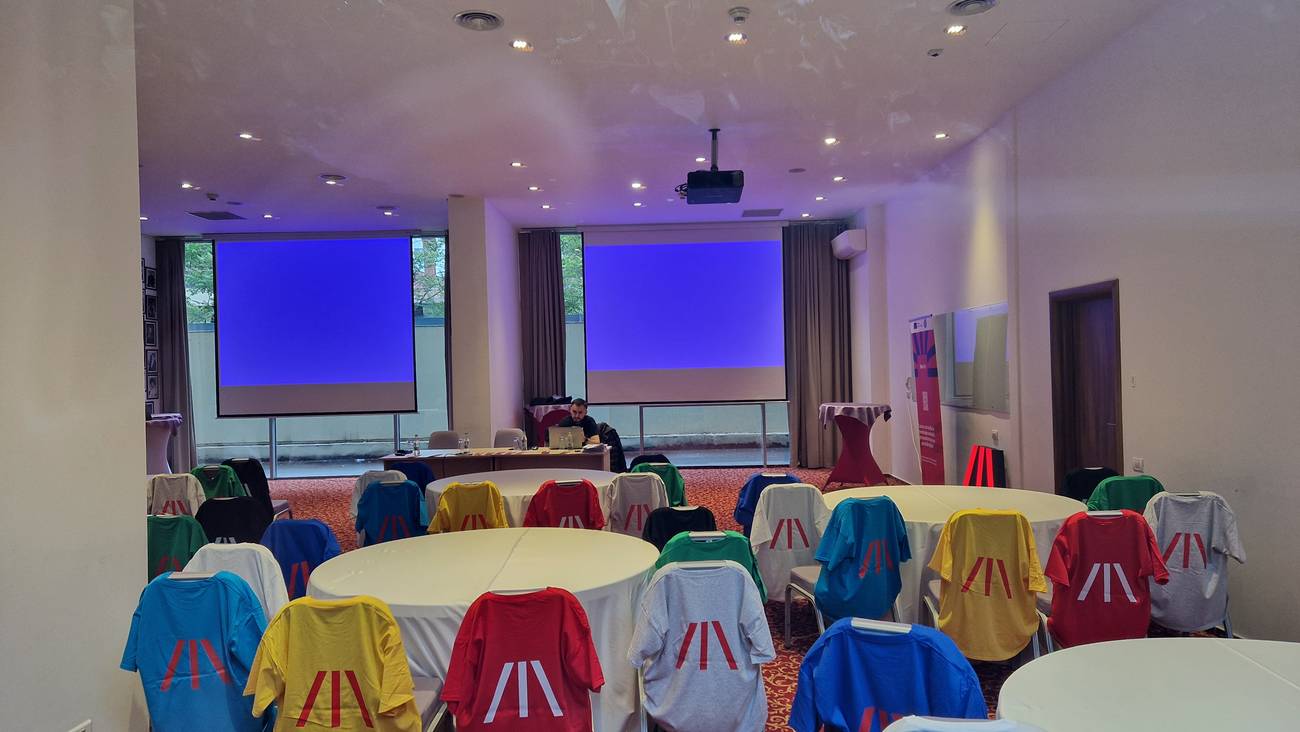 Plenary session — the student teams grouped by colour in the shared workshop
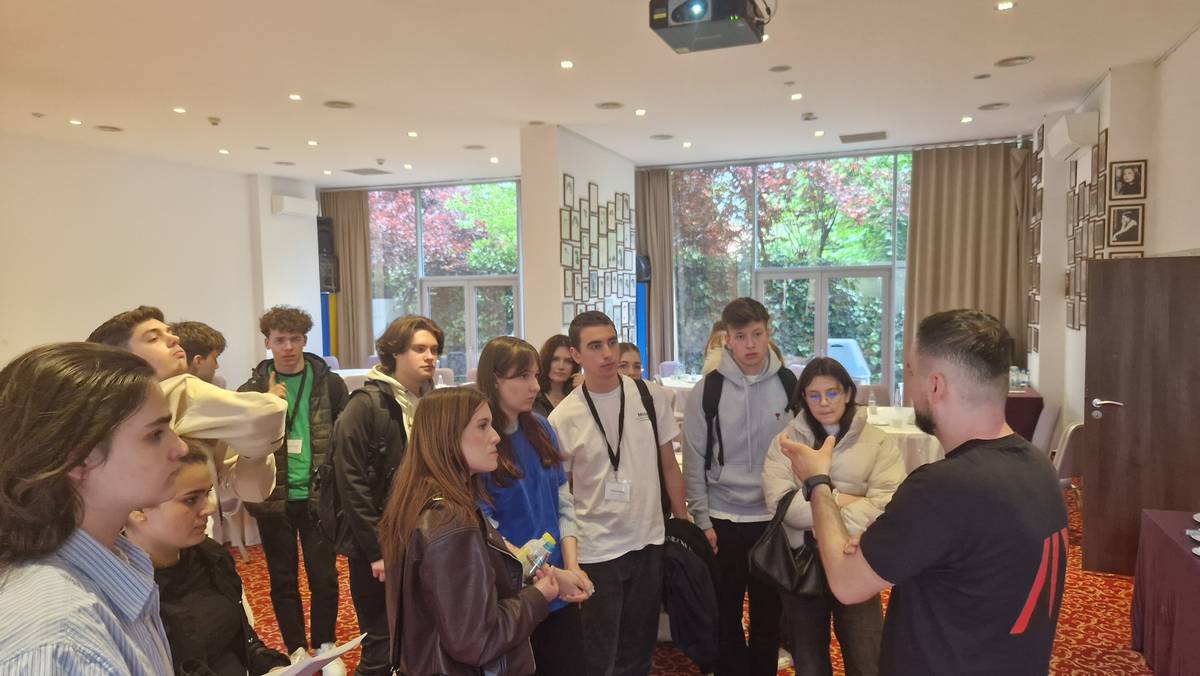 Entrepreneurship workshop: direct feedback from Metaminds specialists
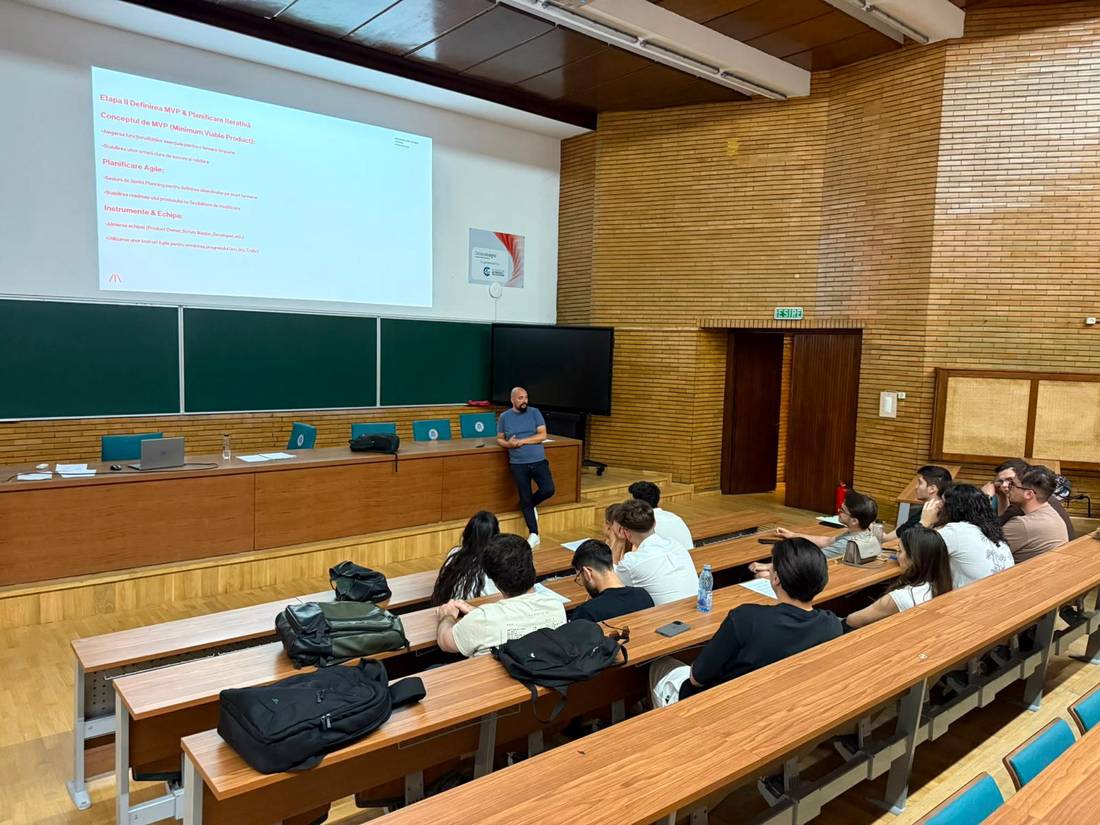 META-PRO course in the amphitheatre: defining the MVP and iterative planning
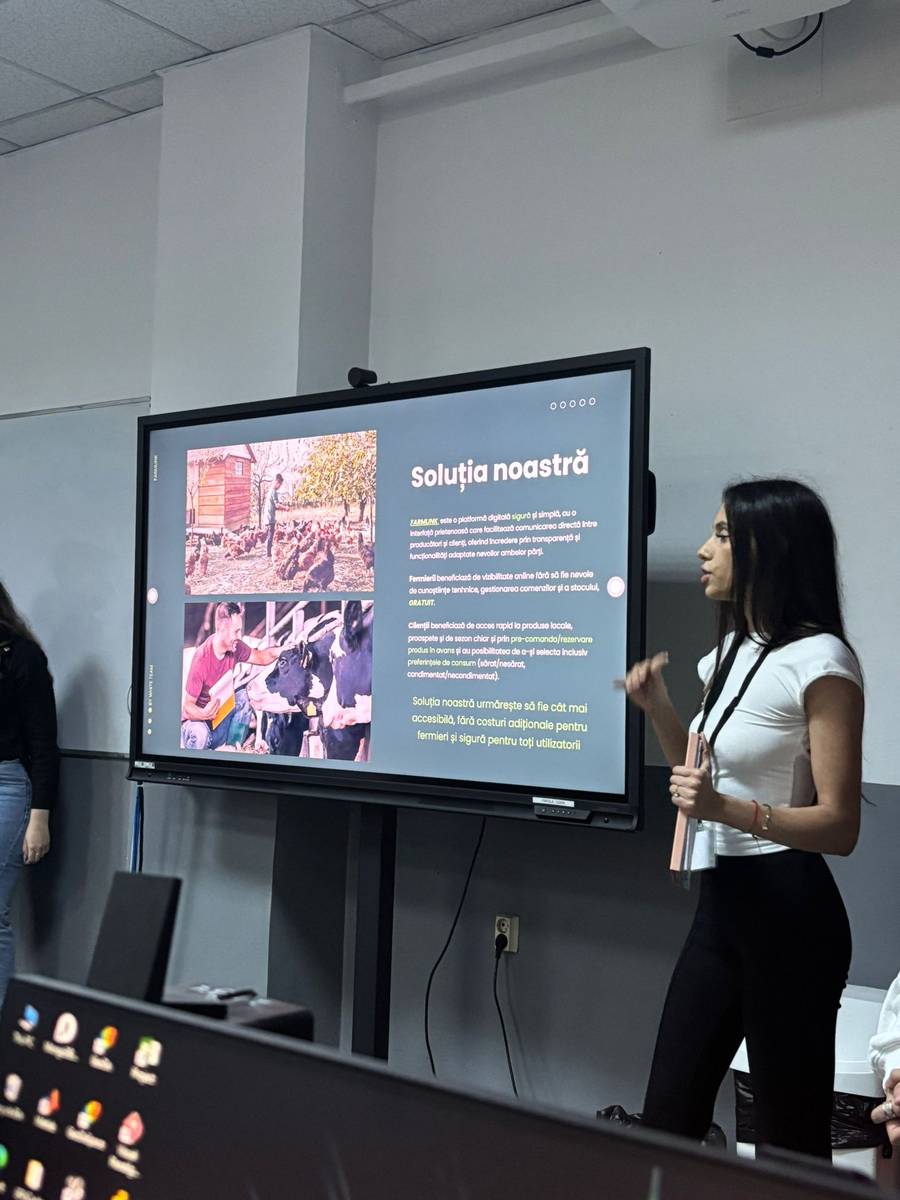 Team pitch — FARMLINK, a platform linking producers directly to customers
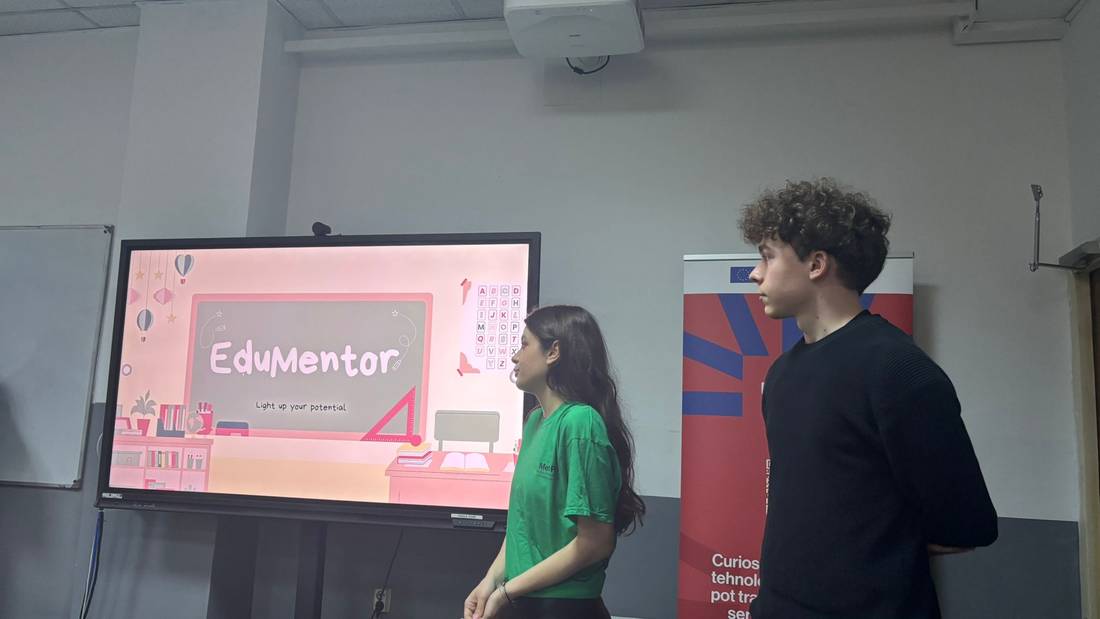 Team pitch — EduMentor, “Light up your potential”
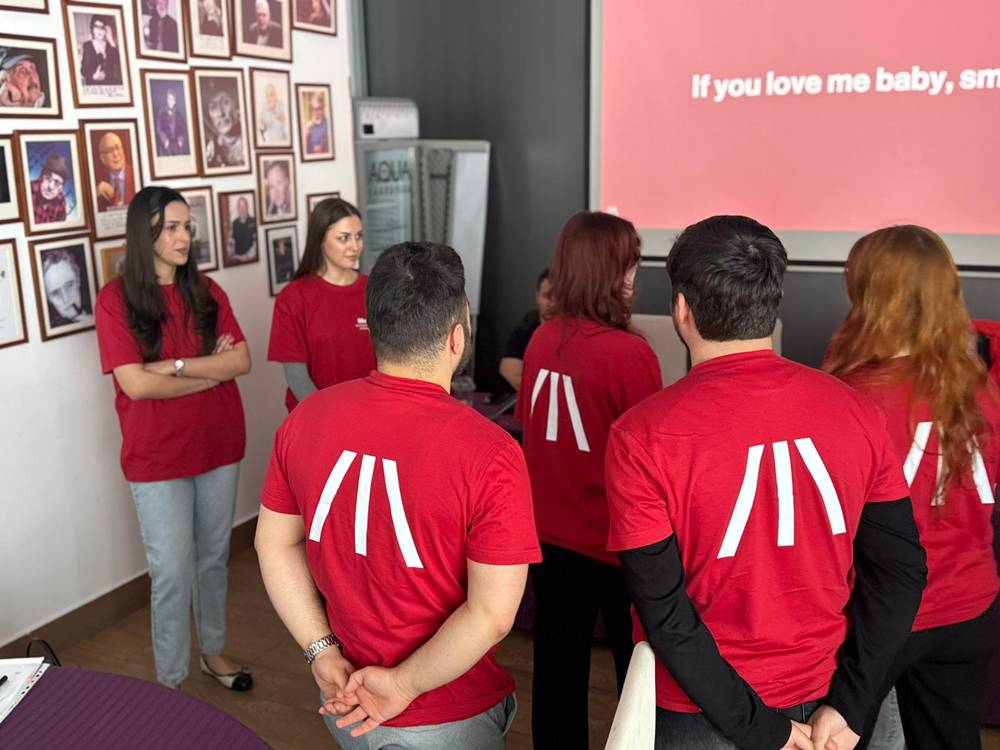 The red team at the opening of the working session
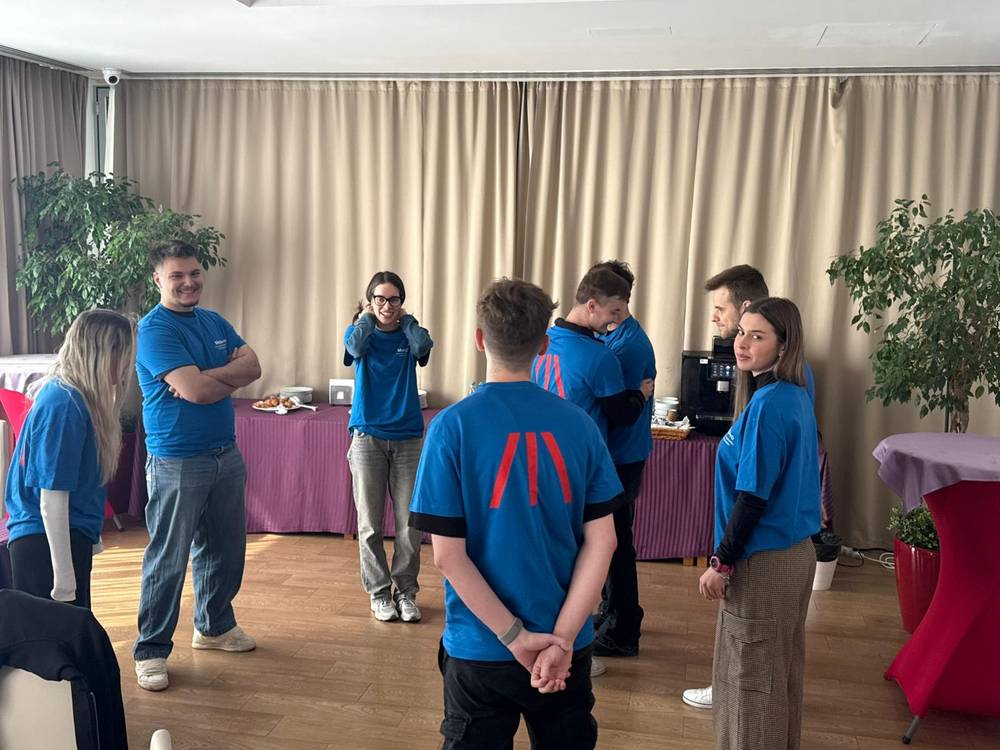 Networking break between workshop sessions
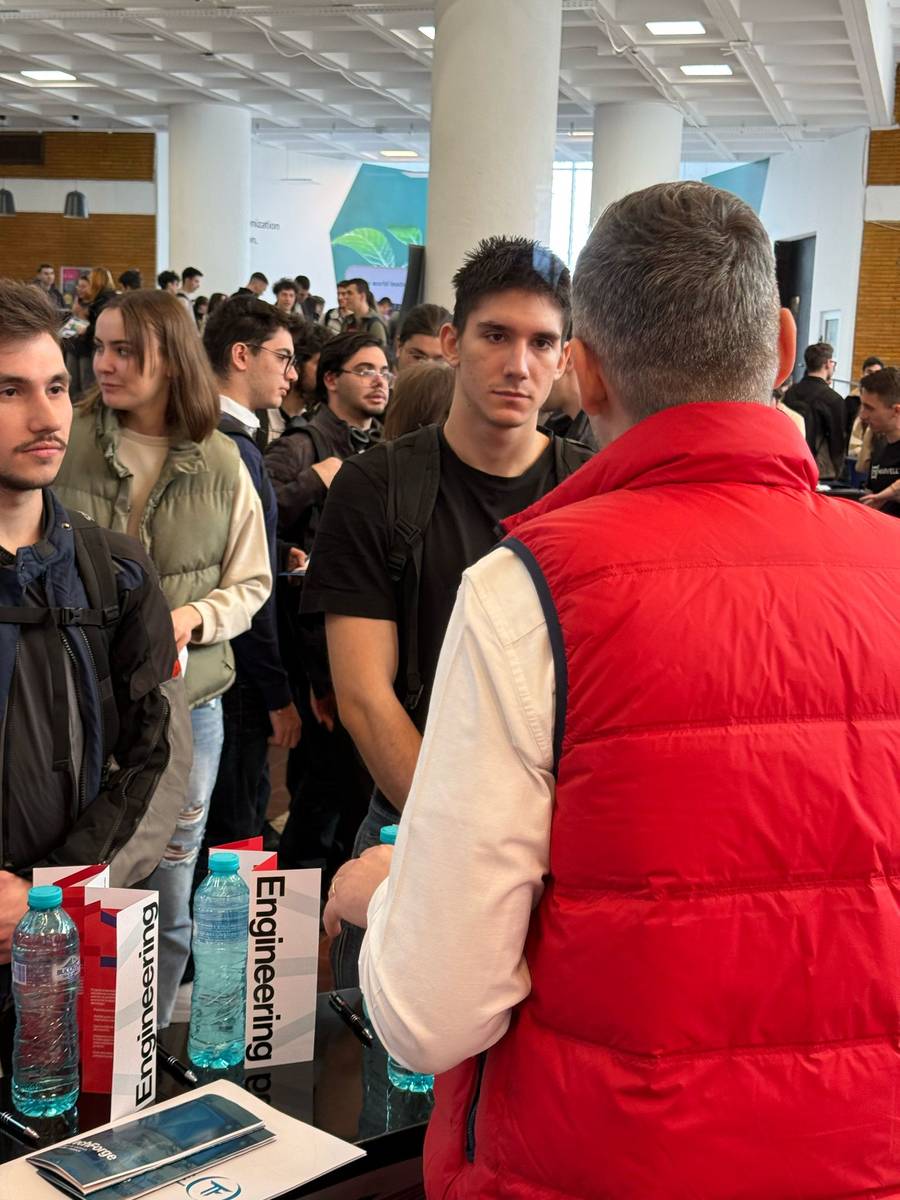 Target-group recruitment: talking to students at the career fair
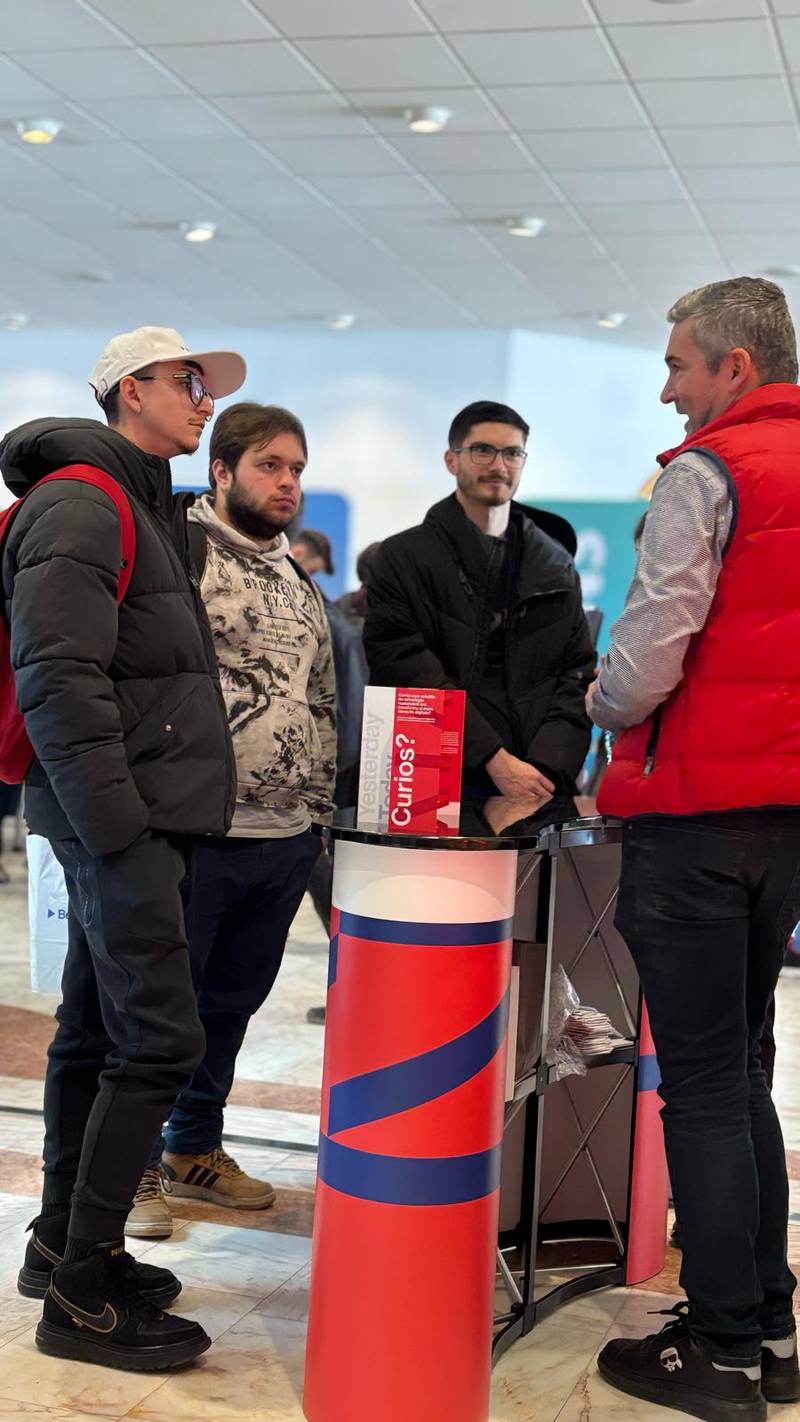 The META-PRO stand — “Curious how technology can transform your career?”
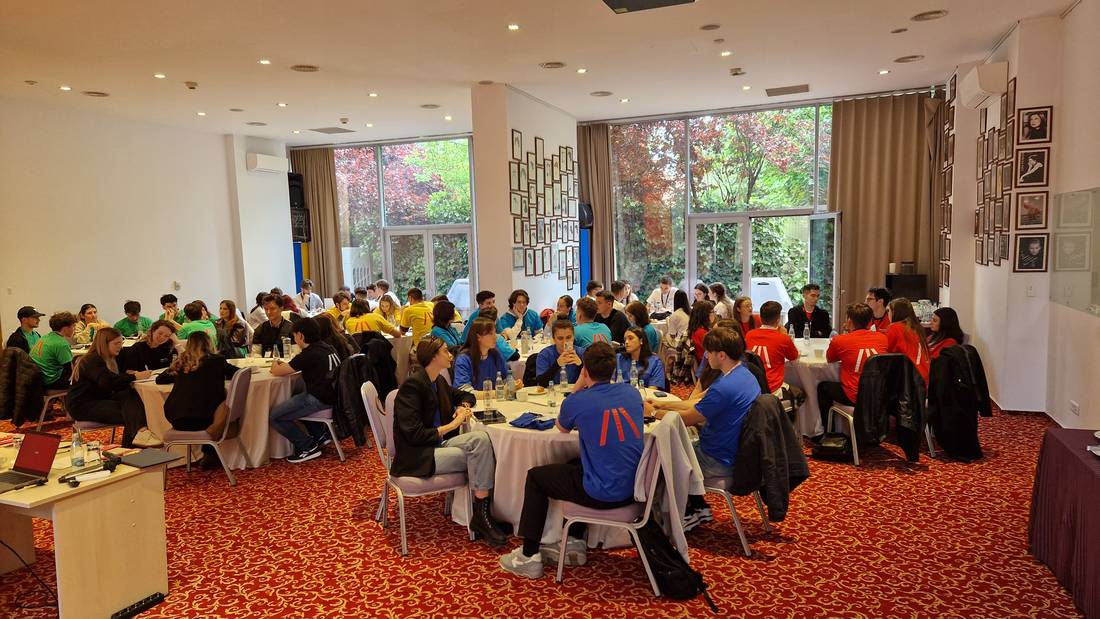 The room set up before a session, with the team T-shirts
09Long-term impact
A model that connects university and employer
The lack of practical experience is a major problem for graduates moving into the labour market. Through this programme, students experience a real working environment and develop communication, analytical thinking, entrepreneurial, green and digital skills.
The long-term effect is a higher quality of life for the target group, continuous professional development and a direct contribution to sustainable development — including reduced pollution and CO₂ emissions and adherence to the DNSH principle.
“Students get to learn directly from industry professionals and can develop skills specific to their field of study in an applied context.”
Each student receives a 6 lei/hour allowance, depending on the placement duration set in their institution’s curriculum.
8 practice tutors and 1 coordinating mentor run the placements, with an average of 3 students monitored per tutor per placement.
Project co-financed by the European Social Fund+ through the Education and Employment Programme 2021–2027. Beneficiary: METAMINDS S.A. · Financing contract no. G2024-66362/22.10.2024 · Project code 317673.
The content of this page does not necessarily represent the official position of the European Union or the Government of Romania.